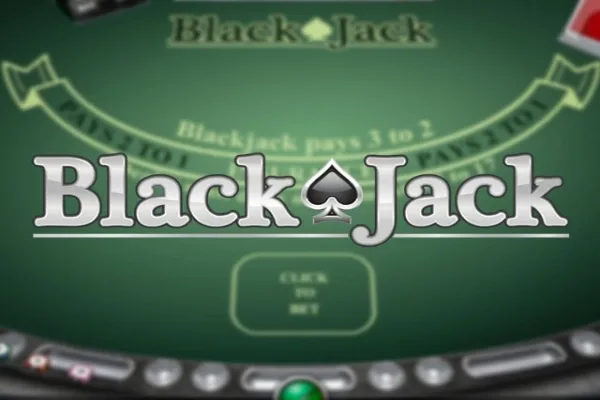
Blackjack
- RTP
- —
- Volatility
- —
- Max win
- —
- Layout
- —
- Lines / ways
- —
- Released
- May 2015
Verified with published game informationSourceNot published means the studio has not released the figure; we do not guess.
Blackjack · demo mode · virtual coins only · 18+
Demo mode · virtual coins · 18+
Features and RTP settings
Inside this review
- What the rule card tells you in one minute
- iSoftBet Blackjack by the numbers
- The reported rules, line by line
- What each rule costs or saves
- The ten-up, no-peek rule and how to adjust
- How a hand plays out
- From hand signals to on-screen controls
- Basic strategy for a large shoe with a stand-on-17 dealer
- Making sense of two RTP figures
- Top win: why there is no single figure
- How it stacks up against other blackjack formats
- Strong points and weak points
- Who should sit down at this table
- Short answers on iSoftBet Blackjack
What the rule card tells you in one minute
Eight decks. Dealer stays on every 17. Naturals pay 3:2, insurance 2:1. One split, on pairs only. No peek for blackjack when the dealer’s upcard is a ten. That is more or less the whole published rule set for iSoftBet’s Blackjack, a software-dealt, single-hand table game listed as released on 1 May 2015, with no side bets, no extra seats and no decision clock.
Most of those rules are standard, a few are not, and in blackjack each one shifts the house edge by an amount that can be measured. This page puts a price on every line using widely published rule-variation figures. One warning first: iSoftBet does not publish the rule sheet itself, so everything below is the rule set as it is commonly reported, and the RTP appears in two versions, 99.64% and 99.40%. The game’s info screen shows which applies.
iSoftBet Blackjack by the numbers
| Spec | Value |
|---|---|
| Studio | iSoftBet |
| Format | Single-hand RNG blackjack |
| Listed release | 1 May 2015 |
| RTP | Unconfirmed; 99.64% and 99.40% both reported |
| Maximum win | Not published |
| Shoe | 8 decks (reported by one source) |
| Dealer rule | Stays on every 17, soft ones included (reported) |
| Payouts | Evens on wins, 3:2 on a natural, 2:1 on insurance |
| Splitting | Once, pairs only (reported) |
| Peek with a ten showing | No (reported) |
| Surrender | Not mentioned |
| Side bets | None |
| Built originally in | Flash |
The reported rules, line by line
There is no public rules page from iSoftBet for this title, so treat the help screen inside the game as the final word. What follows is the rule set as rule summaries describe it, not an official document.
- Shoe: eight decks.
- Dealer on 17: stays, whether hard (such as 10-7) or soft (such as ace-6).
- Ten upcard: the dealer does not peek for a natural before the player acts.
- Splitting: permitted once, and only if the opening two cards are a pair.
- Doubling: one card only, after which the player’s turn is over.
- Insurance: offered when the upcard could lead to a dealer blackjack; pays 2:1.
- Payouts: evens on a normal win, 3:2 on a two-card 21.
- Table: a single hand and no side bets.
Several things are missing from the published summaries: which totals can be doubled, whether doubling is allowed after a split, whether split aces receive only one card, whether the dealer peeks with an ace up, and whether surrender is on offer. Each gap is marked where it affects the analysis, and each is worth checking in the help screen, since a few of them change the right play on particular hands.
What each rule costs or saves
Rule-variation tables for blackjack show how each familiar rule change moves the player’s expected return. The figures here are from the player’s point of view, so a minus sign hurts the player, and an eight-deck game is the baseline, which matches the shoe reported for this title.
| Reported rule | Effect on the player, per standard tables | What it means here |
|---|---|---|
| Eight decks | Baseline; one deck would be worth +0.48% | The weakest of the usual deck counts |
| Dealer stays on soft 17 | Baseline; hitting soft 17 would be -0.22% | The kinder form of this rule |
| Natural pays 3:2 | Baseline; 6:5 would be -1.39% | The normal, stronger payout |
| Single split only | -0.10% for losing resplits | A minor cost |
| No peek under a ten | Complete European no-hole-card: -0.11% (doubles -0.08%, splits -0.03%) | Only partly applies |
| Doubling after a split | -0.14% where it is barred | Undocumented |
| Late surrender | +0.07% against a ten, where offered | Not mentioned, so not counted |
The eight-deck shoe. Widely quoted deck-count analysis puts the edge for a common example rule set at 0.014% with a single deck and 0.577% with eight, a difference of 0.563%. The largest slice of that, 0.433%, comes from standing on stiff totals from 12 to 16. In a small deck, low cards sitting in the player’s hand leave the remainder heavier in tens, so the dealer busts more. Doubles are also worth more with fewer decks, because the cards already out shape what is left. A big shoe waters both effects down, which is why shoe games carry a slightly larger edge than hand-dealt games on otherwise matching rules.
Dealer stays on every 17. A dealer who hit soft 17 would take 0.22% from the player, so this version helps. The logic is direct: drawing on ace-6 gives the dealer another go at turning a feeble 17 into 18 through 21, and those upgrades outweigh the extra busts.
A 3:2 natural. Also in the player’s favour. Dropping to 6:5 costs 1.39%, comfortably the most expensive of the familiar rule changes. At 3:2 a natural returns 1.5 times the stake; at 6:5, 1.2 times. Naturals come along often enough for that gap to outweigh everything else in this section.
A single split. Barring resplits costs 0.10%. With only one split permitted, a new pair formed after splitting cannot be split again, so 8-8 that catches a third 8 must be played as hard 16.
These numbers cannot simply be summed into a precise edge: rules interact, and several here are undocumented. What the table does show is direction. Two friendly rules, standing on soft 17 and a 3:2 natural, sit against three small costs: the eight-deck shoe, the single split and the partial lack of a peek.
The ten-up, no-peek rule and how to adjust
In most American-style games, a dealer with an ace or a ten showing looks at the hole card before any player decides. If it completes a blackjack, the round ends and players lose only their first stake. In the European no-hole-card style, the dealer takes no second card until players have finished, and the well-known downside follows: double or split, then watch the dealer make blackjack, and the extra stakes can go too.
Rule summaries say iSoftBet’s dealer skips the peek with a ten up. They say nothing more about an ace upcard than that insurance appears, and nothing about whether doubled or split hands lose all their stakes or just the first one when a dealer natural is revealed. Some no-hole-card tables refund the added stake in that case, a rule usually called “original bets only”, which removes most of the cost. The help screen shows which version is in play.
Standard tables value full European no-hole-card at -0.11%, on the assumption that extra stakes are forfeited. Since this game only skips the peek with a ten showing, and the handling of extra stakes is unknown, the cost here should be at most that figure and may well be smaller.
Published no-hole-card strategy recommends a few changes when the dealer has not peeked:
- Hard 11 facing a ten: take a card instead of doubling.
- 8-8 facing a ten or an ace: take a card instead of splitting.
- A-A facing an ace: keep splitting.
The reasoning: doubles and splits commit more stake before anyone knows if the dealer has a natural. With a ten showing, the face-down card is an ace about one time in thirteen, and in those rounds a doubled 11 loses two stakes rather than one. That extra exposure is just enough to flip hard 11 against a ten from double to hit. These tweaks only apply if extra stakes really are forfeited.
How a hand plays out
- Stake goes into the single betting spot.
- The player gets two face-up cards; the dealer gets one face-up card.
- If that upcard could produce a dealer natural, insurance may be offered. Taken insurance pays 2:1 if the dealer does hold blackjack, while the main stake loses.
- A player natural pays 3:2 unless the dealer also has one.
- The player hits, stands, doubles (one card, turn over) or splits a pair a single time.
- The dealer draws until reaching 17 or better and stays on any 17.
- A higher total than the dealer, or a dealer bust, pays evens. Equal totals push. A player bust always loses.
That final step hides the game’s central asymmetry. The player acts first, so a bust is settled as a loss before the dealer draws, even if the dealer goes on to bust as well. That timing is where most of any blackjack game’s edge comes from, and the 3:2 natural plus the freedom to double and split are what win most of it back.
From hand signals to on-screen controls
At a real table, decisions are shown with hand gestures so the dealer and the cameras can read them. A solo RNG game swaps every gesture for a button:
| Choice | Gesture at a real table | What the control does |
|---|---|---|
| Hit | Tap the felt or wave cards toward you | Deals a single card |
| Stand | Move a flat palm across the cards | Closes your turn |
| Double | Set an equal stake next to the first and raise one finger | Matches the stake and deals just one card |
| Split | Set an equal stake and show two fingers in a V | Turns a pair into two hands, one time |
| Insurance | Put up to half the stake on the insurance line | Appears as a prompt when available |
Button names and placement are not documented publicly, so the table describes what each control does rather than how it looks. Published descriptions mention two interface points: no timer runs, and the game flags a poor decision with a warning before it is made.
Basic strategy for a large shoe with a stand-on-17 dealer
Basic strategy is the choice for every combination of player hand and dealer upcard that gives the best long-run result under a given rule set. It does not overcome the game. Played flawlessly it leaves the edge where it is and simply avoids making it worse, and both reported RTPs take it for granted. The lines below follow the widely published chart for four to eight decks with the dealer staying on soft 17, offered as general game knowledge.
Hard hands
- Hard 12: stay against a dealer 4, 5 or 6; draw otherwise.
- Hard 13 through 16: stay against a dealer 2 through 6; draw otherwise.
- Hard 17 and up: always stay. Hard 8 and below: always draw.
When to double
- Hard 9 facing 3 through 6; hard 10 facing 2 through 9; hard 11 facing 2 through 10, except take a card with 11 against a ten because of the no-peek rule.
- Soft 13 through 18 chiefly against a dealer 3 through 6, with the smaller soft totals doubled against a narrower set of upcards.
Soft hands
- Soft 17 and below: draw if not doubling.
- Soft 18: stay, but draw against a 9, a ten or an ace.
- Soft 19 and above: stay.
Pairs, with a single split
- A-A and 8-8: split, though take a card with 8-8 facing a ten or ace under the no-peek rule.
- 10-10 and 5-5: never split.
- 2-2 and 3-3 split against 4 through 7; 6-6 against 3 through 6; 7-7 against 2 through 7.
- 9-9: split against 2 through 6, 8 or 9; stay against 7, a ten or an ace.
- 4-4: split against 5 or 6 only where doubling after a split is permitted; that is undocumented, so the cautious choice is to leave them together.
Surrender and insurance
- The complete chart gives up hard 16 against 9, ten or ace and hard 15 against a ten. Surrender is not mentioned for this game, so those hands take a card instead.
- Conventional advice is to decline insurance every time. It is a side wager that the hole card is a ten, and an eight-deck shoe does not contain enough tens to make 2:1 a fair price.
The logic behind the chart makes it easier to remember. A dealer showing 2 through 6 is in a weak spot, forced to keep drawing to 17 and busting often, so the chart stays on stiff hands and doubles more freely. A dealer showing 7 through ace is strong, so the chart keeps drawing on 12 to 16 and reserves doubles for totals likely to end on 20 or 21.
With an RNG shoe and nothing published about when it reshuffles, counting cards has no dependable footing here.
Making sense of two RTP figures
Two returns are quoted for this game: 99.64%, and 99.40%, the latter described as assuming basic strategy. Different versions may show either one, so read the setting from the info screen.
Converted to house edge, that is 0.36% against 0.60%. Over a very long run with perfect play, the first means the game keeps 36 units of every 10,000 staked and the second means 60. A gap of 0.24 points is bigger than the published cost of hitting soft 17, so it is not just rounding.
The commonly cited eight-deck example edge of 0.577% sits closer to 0.60%, but its example rules differ from this game’s, so it is a comparison rather than proof. Whichever figure is right, it assumes every decision follows basic strategy; staying on 12 against a 2, splitting tens or buying insurance all drag the real return down. In blackjack, RTP is a long-run design number, and short sessions can stray a long way from it either way.
Top win: why there is no single figure
No maximum win is published, and blackjack does not have one in the way a slot does. The reported rules do set out what one round can pay relative to the first stake:
- A plain win returns 1x; a natural returns 1.5x.
- A successful double returns 2x.
- A split with both hands winning returns 2x.
- A split where both hands are doubled and win returns 4x, but only where doubling after a split is allowed, which is undocumented.
- Insurance pays 2:1 on its own stake, yet the main stake loses to the dealer natural in that round, so it softens a loss rather than raising the top result.
The biggest confirmed single-round return is therefore 2x the first stake, with 4x reachable only under a rule that has not been confirmed.
How it stacks up against other blackjack formats
iSoftBet’s multi-hand game. The studio also has a multi-hand software blackjack. Descriptions of it report eight decks reshuffled after every round, as many as five hands, no resplits or surrender, doubling after a split and a dealer who does peek. If that is right, it differs from this game on the peek rule and is the better choice for anyone who wants several hands at once.
European no-hole-card tables. The ten-up rule is a partial version of the European approach covered above. This game seems to sit between the American and European models, which is why its strategy tweaks only apply against a ten.
One-deck and hit-soft-17 tables. On standard rule-variation figures, an eight-deck shoe trails a single deck by 0.48% for the player, while staying on soft 17 is worth 0.22% over a table where the dealer hits it. The reported rule set lands mid-pack for online blackjack: ahead of hit-soft-17 or 6:5 tables, behind smaller-shoe games that allow resplitting.
Strong points and weak points
Strong points
- Two friendly core rules: the dealer stays on every 17 and a natural pays 3:2.
- One hand, no side bets and no clock keep each decision simple and unhurried.
- The game is reported to warn about weak moves before they are made.
- Both reported RTPs are high for a casino-style game, given basic strategy.
Weak points
- The RTP is unconfirmed, with 0.24 points between the two reported figures.
- The eight-deck shoe, single split and ten-up no-peek rule each cost the player a little.
- No verifiable published rules, so points such as doubling after a split remain unknown.
Who should sit down at this table
This is blackjack at its most stripped back: one hand, no side bets, no clock and eight rules. The built-in warnings about weak moves make it a sensible free-play space for learning basic strategy. It also rewards players who want to see exactly what each rule is worth, since every reported rule can be measured against the figures above.
It is a weaker match for anyone after several hands, side bets, a live-table atmosphere or a rule set backed by an official source.
Short answers on iSoftBet Blackjack
What size shoe does iSoftBet Blackjack deal from?
Eight decks, according to the widely reported rules. iSoftBet has no public rule sheet, so the help screen inside the game is where to confirm it.
Is soft 17 a hit or a stand for the dealer here?
A stand: the dealer stays on every 17. Rule-variation tables rate that 0.22% better for the player than a dealer who hits soft 17.
How is a natural paid?
At 3:2. Ordinary wins pay evens, and insurance pays 2:1.
Can a pair be split more than once?
No. A single split is allowed, and only on a pair.
What RTP should I expect?
iSoftBet has not confirmed one. Listings give 99.64% or 99.40%, the second assuming basic strategy, so check the info screen for the setting in use.
Will basic strategy get me ahead of the house?
It will not. It is the best-documented way to play each hand, but the house edge stays in place.
Does the dealer peek for blackjack?
Rule summaries say there is no peek with a ten showing. What happens with an ace showing is undocumented, apart from insurance being offered.
What is the most one round can return?
No maximum is published. Under the reported rules, the biggest confirmed single-round return is 2x the original stake.
Rate this game
More games like Blackjack


Common questions answered
What size shoe does iSoftBet Blackjack deal from?
Eight decks, according to the widely reported rules. iSoftBet has no public rule sheet, so the help screen inside the game is where to confirm it.
Is soft 17 a hit or a stand for the dealer here?
A stand: the dealer stays on every 17. Rule-variation tables rate that 0.22% better for the player than a dealer who hits soft 17.
How is a natural paid?
At 3:2. Ordinary wins pay evens, and insurance pays 2:1.
Can a pair be split more than once?
No. A single split is allowed, and only on a pair.
What RTP should I expect?
iSoftBet has not confirmed one. Listings give 99.64% or 99.40%, the second assuming basic strategy, so check the info screen for the setting in use.
Will basic strategy get me ahead of the house?
It will not. It is the best-documented way to play each hand, but the house edge stays in place.
Does the dealer peek for blackjack?
Rule summaries say there is no peek with a ten showing. What happens with an ace showing is undocumented, apart from insurance being offered.
What is the most one round can return?
No maximum is published. Under the reported rules, the biggest confirmed single-round return is 2x the original stake.